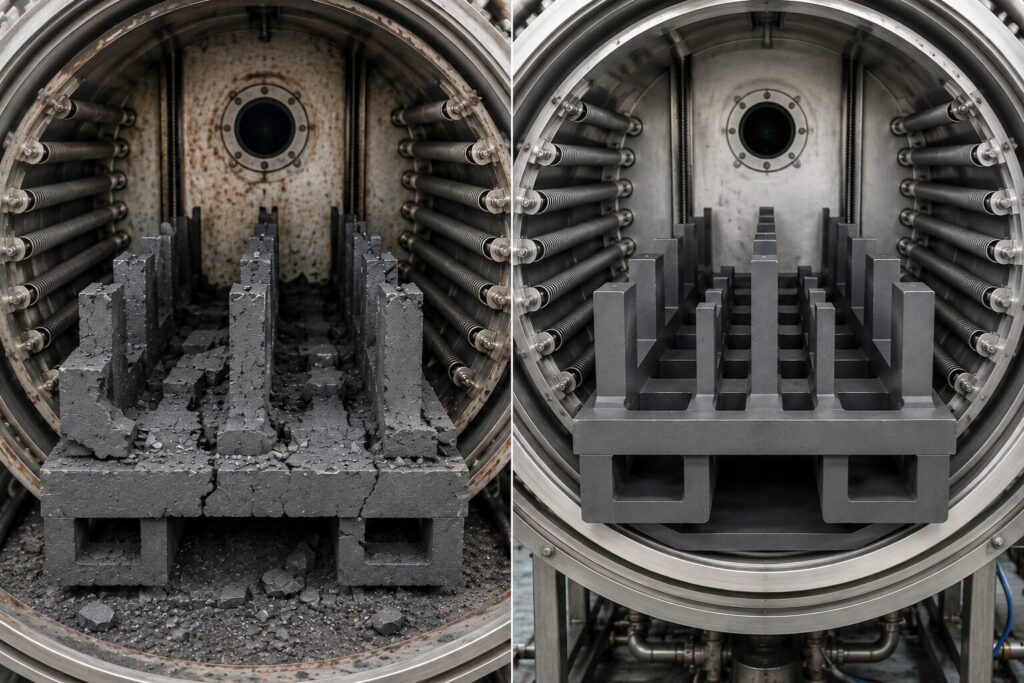
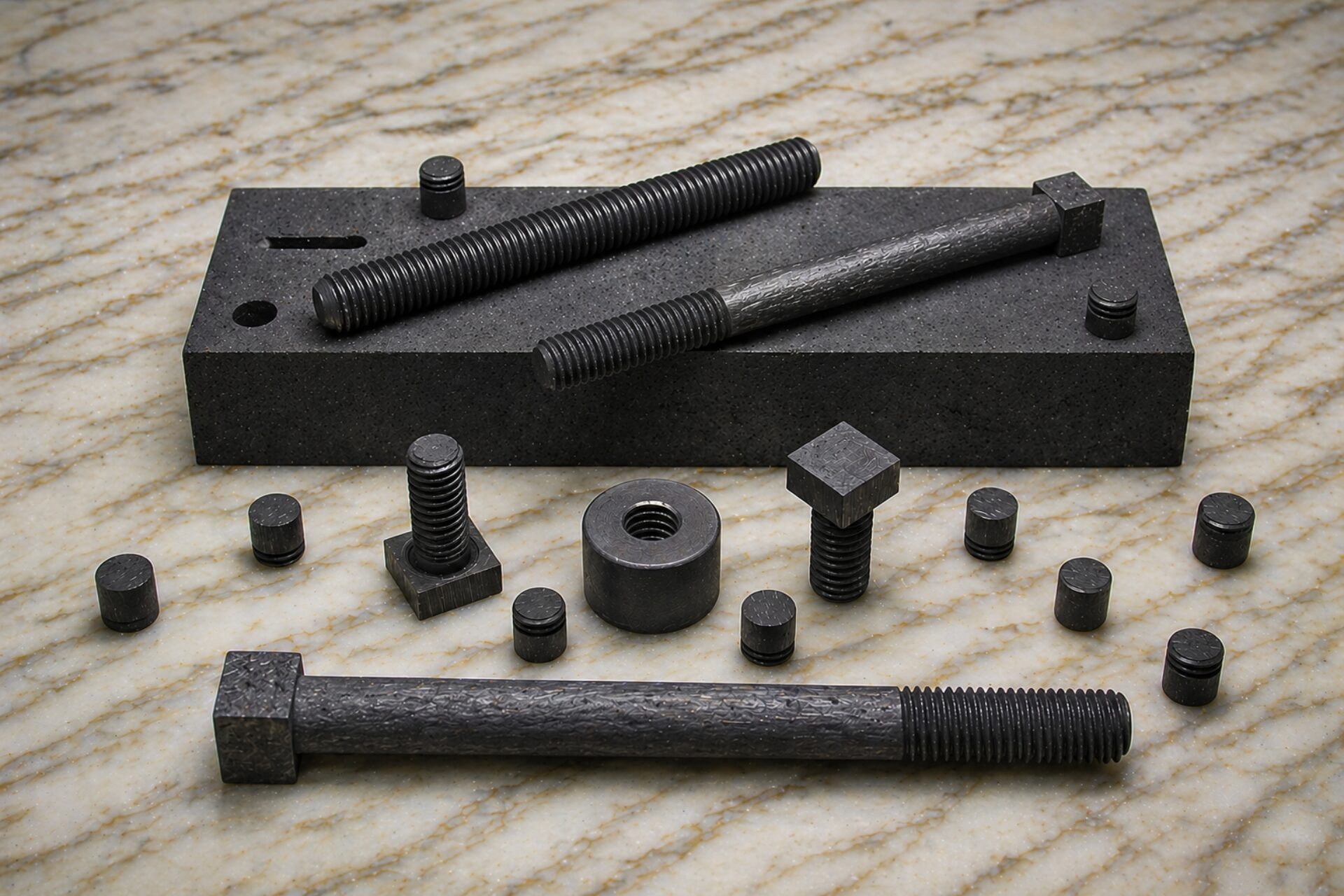
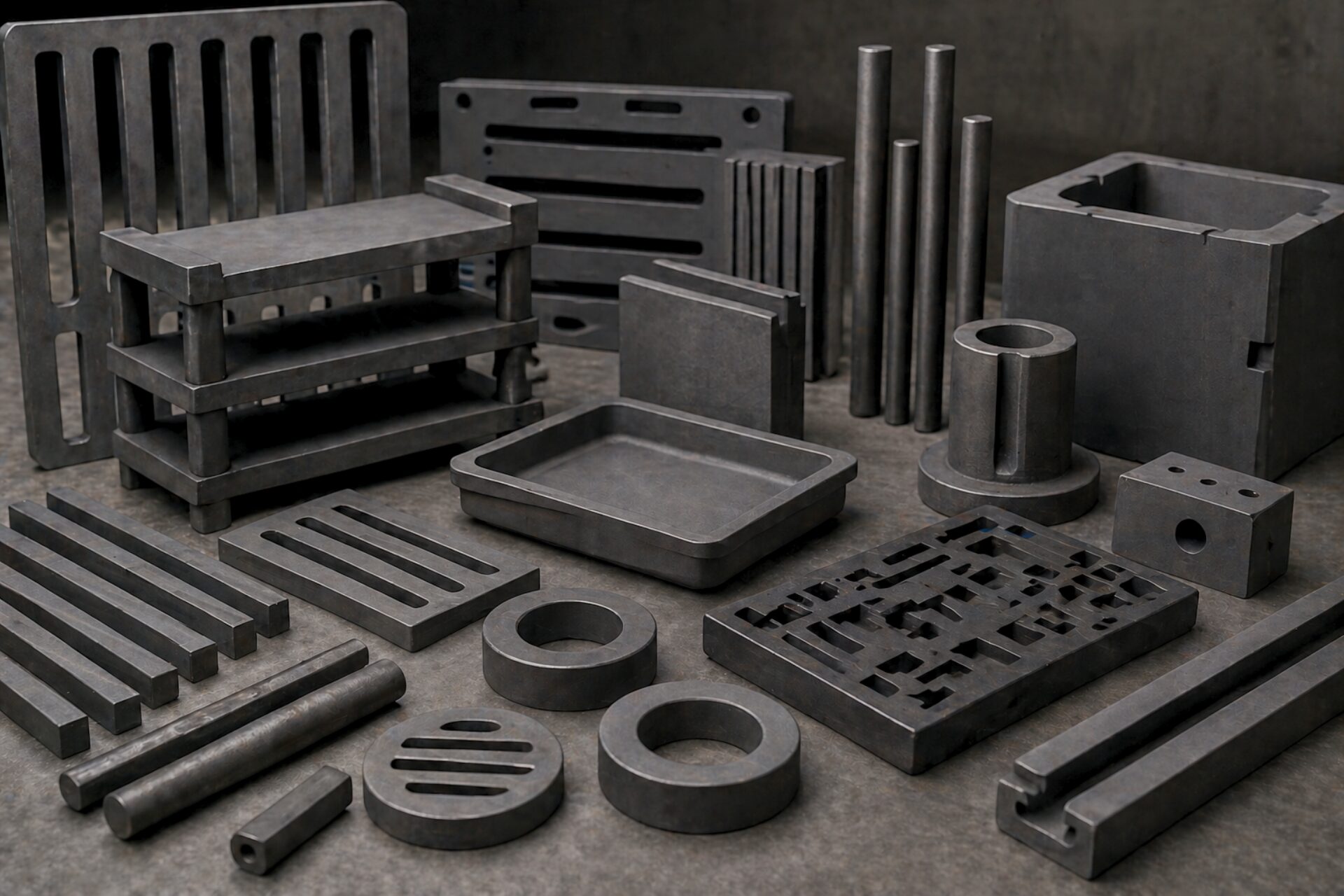
Graphite components are widely used in vacuum furnaces because of their excellent high-temperature performance, thermal stability, and resistance to thermal shock. However, even high-quality graphite components can fail prematurely when operating conditions or material selection are not properly considered.
Understanding the most common causes of failure can help extend component life and improve furnace reliability.
Thermal Shock Damage.
Rapid heating or cooling can create internal stresses within graphite components. Over time, repeated thermal cycling may lead to cracks, chipping, or structural weakening.
How to prevent it:
Follow controlled heating and cooling rates.
Avoid sudden temperature changes.
Ensure uniform heat distribution inside the furnace.
Oxidation Problems.
Although graphite performs exceptionally well in vacuum environments, exposure to oxygen at high temperatures can cause material loss and reduce component strength.
Common causes include vacuum leaks, worn seals, or process contamination.
How to prevent it:
Perform routine leak inspections.
Maintain furnace seals.
Monitor vacuum integrity regularly.
Mechanical Overloading.
Graphite fixtures, trays, and supports can fail when subjected to loads beyond their design limits. Poor load distribution may result in cracking, bending, or premature wear.
How to prevent it:
Verify load requirements.
Improve fixture support.
Avoid excessive unsupported spans.
Material Selection Mistakes.
Not all graphite grades offer the same properties. Selecting a material based only on cost can lead to reduced service life and inconsistent performance.
Factors to consider include:
Density.
Strength.
Thermal conductivity.
Electrical conductivity.
Operating temperature.
Choosing the right graphite grade for each application is critical.
How to Extend Component Life.
To maximize graphite component performance:
Use the appropriate graphite grade.
Maintain vacuum system integrity.
Control heating and cooling cycles.
Inspect components regularly.
Optimize fixture design and load distribution.
Most graphite component failures can be traced to thermal shock, oxidation, mechanical overload, or improper material selection. By addressing these factors, manufacturers can reduce downtime, improve reliability, and extend the service life of vacuum furnace components.