
Graphite Bushings: Questions to Answer Before Choosing an Impregnation

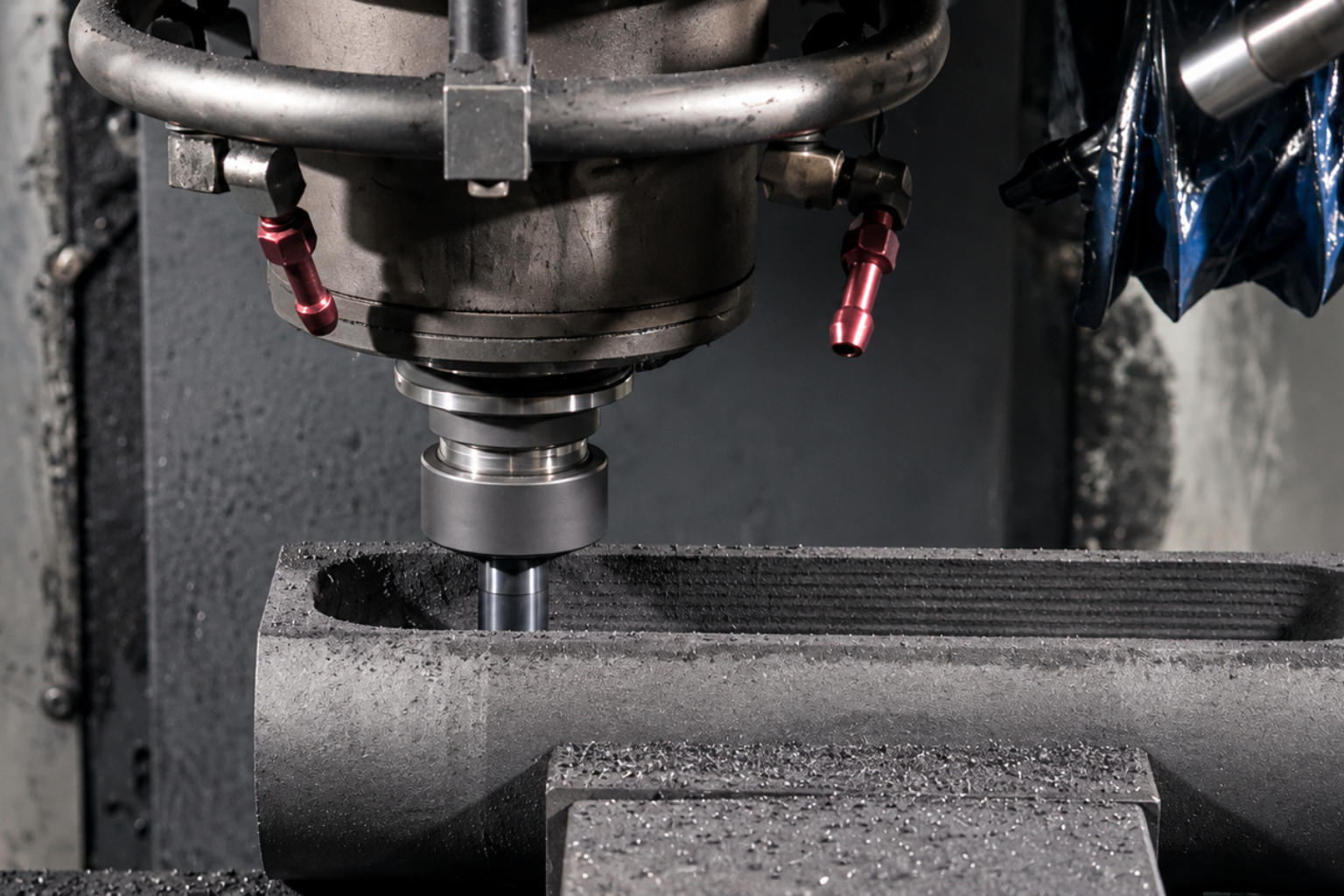
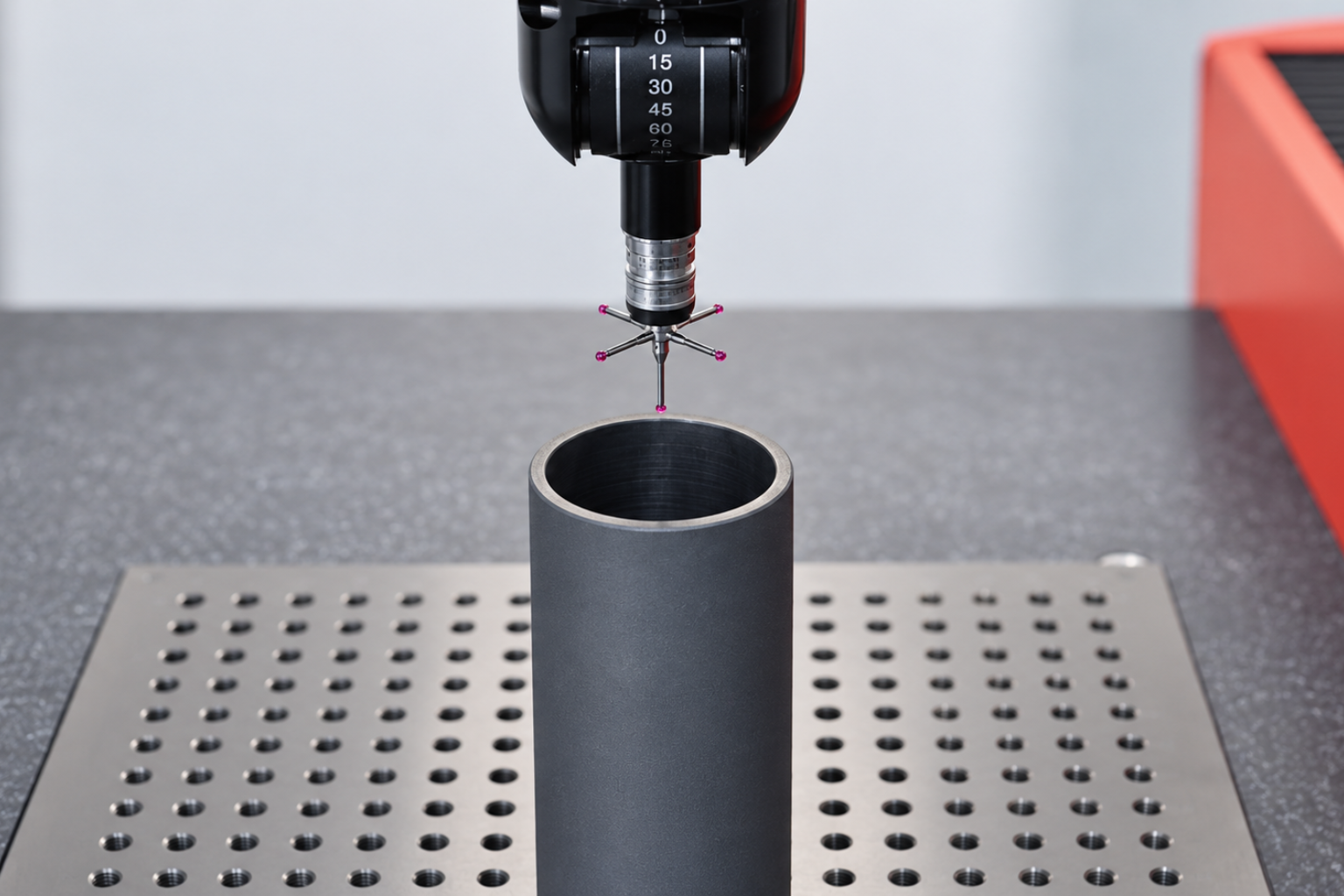
Coordinate measuring probe positioned above a cylindrical graphite bushing for dimensional inspection. Copiar

Choosing an impregnation for a graphite bushing starts with the machine it’s going into. The shaft, lubrication, load, and operating environment all affect which combinations are worth considering. Impregnation can change how the bushing behaves, but you need to review it together with the base graphite grade and the conditions at the contact surface.


Start with how the bushing runs.

Describe the shaft material and surface finish, operating speed, applied load, and alignment. Note whether the motion is continuous, intermittent, or oscillating, and what happens during startup and shutdown. If you’re replacing a failed bushing, include photos of the wear and how long the part ran. That history gives the supplier something concrete to review without assuming the wear pattern proves the cause.

Explain how the contact is lubricated and which fluids reach it. A dry-running bushing raises different questions from one exposed to a process fluid. Include temperature, pressure, chemical exposure, and any sealing or dimensional requirements. Those details help determine whether impregnation is appropriate and which options need a closer look.

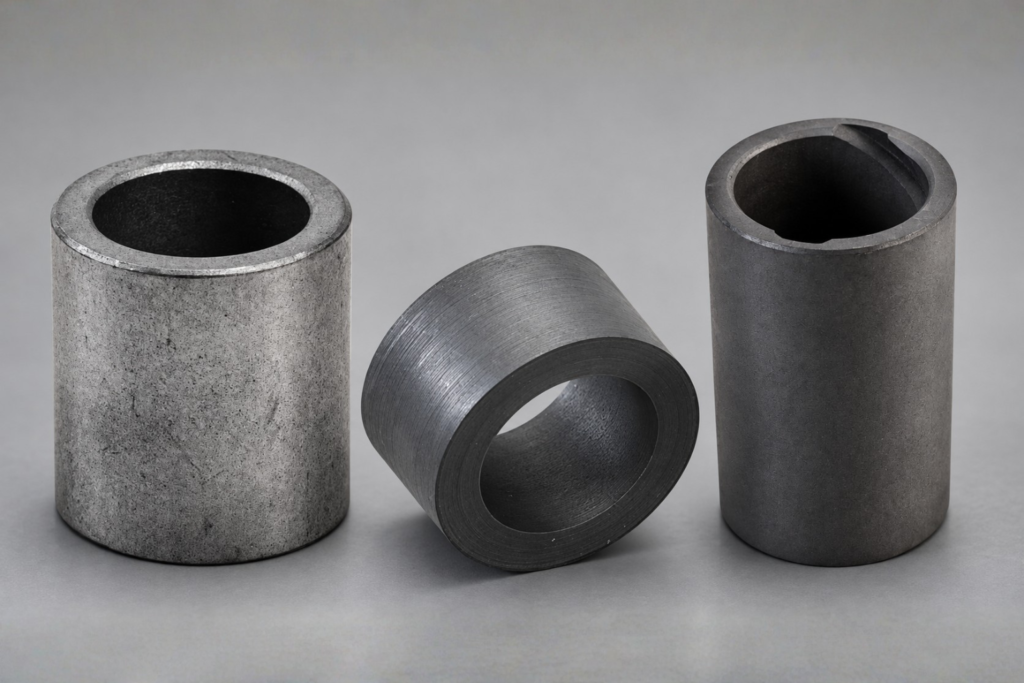
Three cylindrical graphite bushings with different surface finishes and geometries used to illustrate graphite bushing selection. Copiar

Understand what the impregnation changes.

An impregnant may be used to address permeability, wear behavior, or another property needed for the application. The effect depends on the treatment and the base material. Phenolic resin, babbitt, and antimony can’t be treated as interchangeable options, and a result for one graphite grade won’t necessarily apply to another. Ask the supplier to confirm the available combination and its limits for your operating conditions.

Request the base graphite grade, impregnant, temperature and chemical limits, and any implications for machining or design. If an older print specifies a treatment without giving the reason, review the service conditions before making a substitution. Two bushings with the same dimensions may behave differently in the machine.


Put the application details with the drawing.

Send the drawing or sample with the shaft details, load, motion, lubrication, temperature, and fluid exposure. Mark the tolerances and surface finishes that matter to fit and operation. If this is a replacement, explain what happened to the previous part and what service conditions the new bushing needs to meet. That gives the supplier a basis for discussing a finished component.

For related products, see Mechanical Applications. To discuss your bushing, send the drawing and operating details through Request a Quote.


📩 sales@usglobalgraphite.com
📞 (956)-539-7162
🌐 https://usglobalgraphite.com/

SHARE:

Facebook
X
LinkedIn
Email
Picture of GLOBAL GRAPHITE

GLOBAL GRAPHITE

Download our catalog!

Please enter your email address to access the file.

Download our flyer!

Please enter your email address to access the file.

Download our flyer!

Please enter your email address to access the file.

Download our flyer!

Please enter your email address to access the file.

Download our flyer!

Please enter your email address to access the file.

Download our flyer!

Please enter your email address to access the file.

Download our catalog!

Please enter your email address to access the file.

Download our catalog!

Please enter your email address to access the file.