
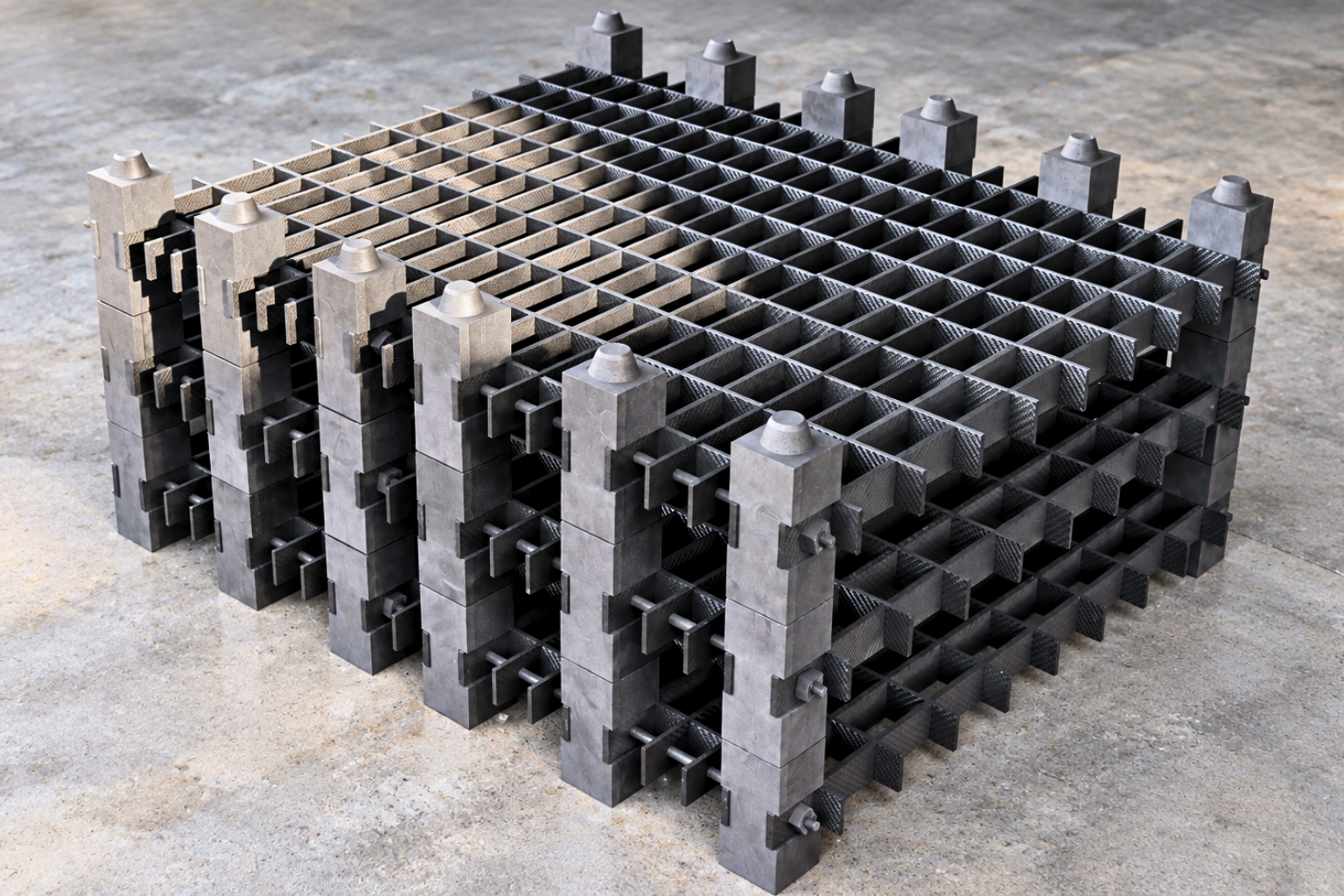
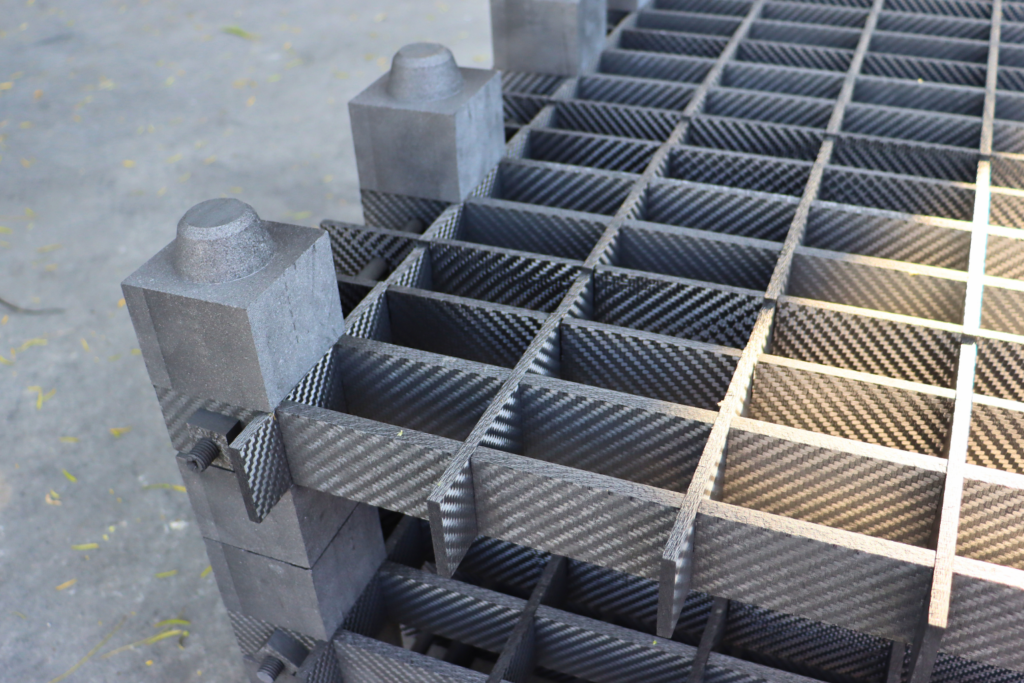
Trace the weight from the workpieces through the grid and beams to the furnace supports. Then look closely at the connections along that path. Mark any pins, fasteners, or joints that need to come apart for maintenance. A replaceable beam may suit your maintenance plan, but the joint still needs to work with the alignment requirements and furnace conditions.
Include mating dimensions and tolerances at the connections and support points. If you’re replacing a rack that cracked or shifted, show where it happened and how the load was arranged at the time. Those observations help the review, although they don’t establish the cause on their own. Global Graphite sources CFC and can machine, fabricate, and assemble fixtures for projects within its confirmed capabilities.
Check the space around the workpieces, handling equipment, and nearby hot-zone components. Allow for the dimensional changes expected during the cycle, and consider access for inspection and any effect on process flow. Review the atmosphere, peak temperature, hold time, cycle frequency, and cleaning practices with the furnace team and material supplier. CFC suitability depends on the grade and environment. In particular, oxidation must be addressed wherever the material may encounter oxygen at high temperature.
Send a load layout showing the maximum load and support locations, along with the available furnace space and handling method. Include the atmosphere and heating cycle, plus drawings or photos of the current fixture if there is one. Mark any damage and any dimensions you can’t change. With that information, the conversation can focus on how the finished rack needs to work.
Have a fixture layout ready? Send it through Request a Quote with a few notes on the application. For an overview of related components, see Heat Treatments.
 sales@usglobalgraphite.com
 (956)-539-7162
 https://usglobalgraphite.com/